






 All posts
The science behind why structure and rewards actually work for ADHD brains
The research behind timed work blocks, spaced study, and reward systems, and why they work so well for ADHD brains. No app required.
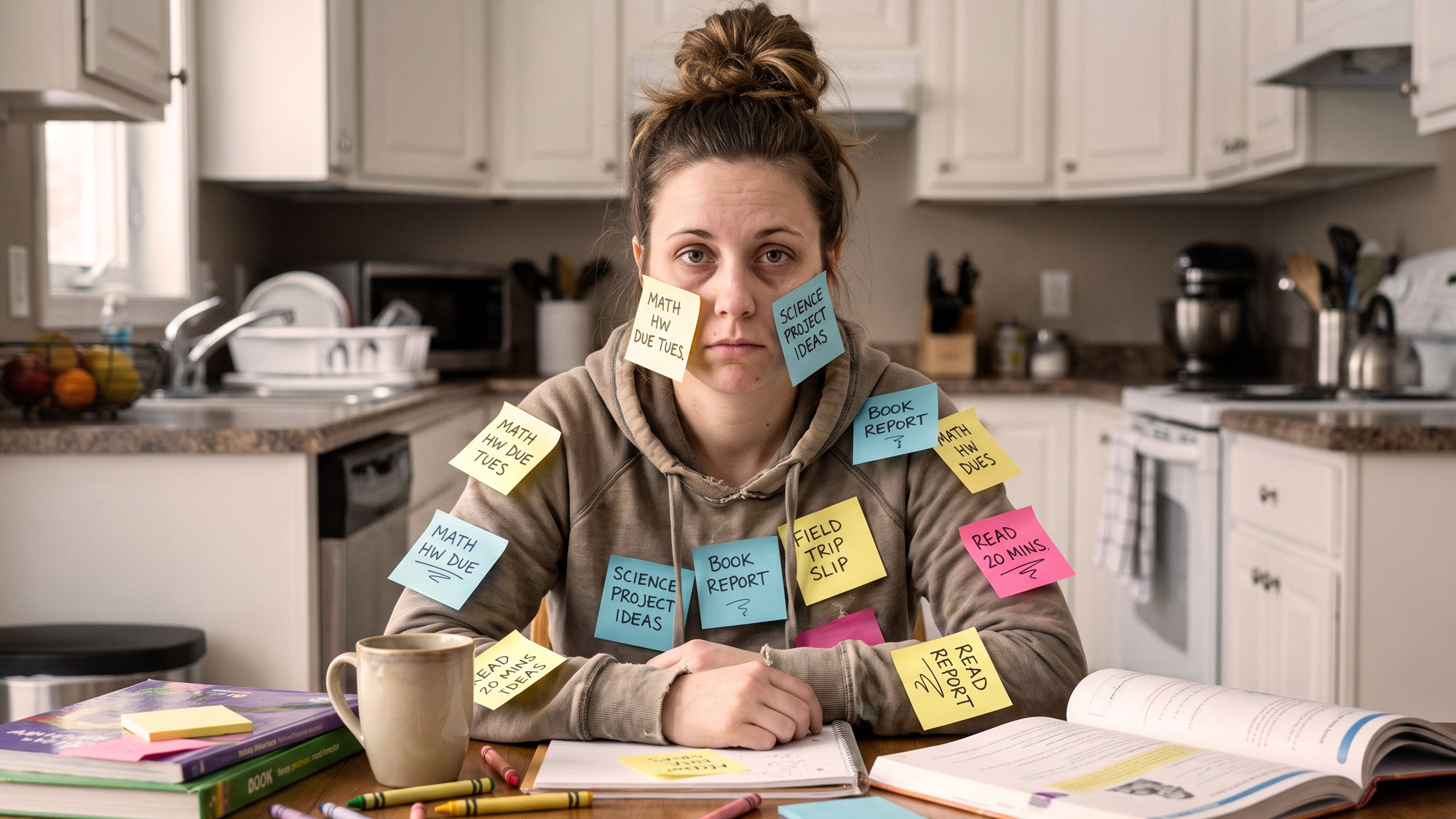
When I first started building a system to help my daughter with homework, I did not know the science behind why it worked. I just knew that it did.
The work blocks. The scheduled breaks. The small rewards for effort, not just for finishing. I did not set out to build any of it on purpose. I was upset one school night, out of ideas, and went looking for help. That search is what led me to timed work blocks in the first place. From there, it was trial and error: rewards, breaking tasks into pieces, studying a little at a time. I could not tell you every step in order. I just kept what worked, and the system started to develop.
It was only later, once the app concept for Myzo was further along, and I started reading more deeply, that I understood what I had stumbled into.
These are not parenting hacks. They are evidence-based interventions with decades of research behind them. And understanding why they work changes the way you use them.
The Trouble with Starting
Most people understand ADHD as an attention problem. But that framing undersells what is actually happening in the brain.
Researchers Russell Barkley and Tom Brown, two of the most cited scientists in the field of ADHD, describe the condition primarily as a disorder of executive function and self-regulation. Executive function refers to the brain's ability to plan, initiate, organize, and follow through on tasks. It lives primarily in the frontal lobe. And in children with ADHD, these functions are significantly impaired.
According to CHADD, these impairments directly affect a child's ability to begin, work on, and complete tasks. The brain is not refusing. It is missing the mechanism that translates intention into action.
Think about what that means in practical terms. Your child sits down to do homework. They know they need to do it. They want to do it, I mean, -ish. They can describe the assignment correctly. But nothing happens. The gap between knowing and doing is where executive dysfunction lives, and no amount of pressure, encouragement, or star charts closes it on its own.
This is not defiance. It is neurology. Kids with these challenges are not choosing to struggle. Their brains just have not caught up yet to actually starting something, sticking with it, and following it through to the end.
This is not defiance. It is neurology.
Understanding this does not mean lowering expectations. It means changing the approach. Instead of trying to motivate the brain to push through a wall, you build a structure that removes the wall.
The Case for Timed Work Blocks
An open-ended task, "go do your homework," gives the ADHD brain nothing to aim for. There is no finish line. No boundary. No defined moment when the effort ends. For a brain that struggles to sustain effort toward a distant goal, the open-endedness is paralyzing. The task feels infinite. Infinite tasks do not get started.
A timed work block, twenty to thirty minutes of focused work followed by a defined break, changes the equation entirely. The brain now has a start point, an endpoint, and a rest on the other side. The task is no longer infinite. It is survivable.
This kind of structure, sometimes called time-blocking, shows up again and again in ADHD research and coaching literature as one of the more consistently useful strategies for students who struggle to start. Not because the timer does the work, but because it removes the feature of the task that makes starting feel impossible.
The length matters. Shorter blocks tend to work better for ADHD students than longer ones. The brain needs to believe it can reach the end before giving up. A two-hour study session makes that hard. A twenty-five-minute block makes it easy to say yes.
The break between blocks is equally important, and equally misunderstood. It is not a reward for completing a block. It is a physiological reset that makes the next block possible. ADHD brains burn through sustained focus faster than neurotypical brains. By the time the child is visibly struggling, the resources are already depleted. Building the break in before the fuel runs out is more effective than waiting until the child has already disengaged.
The break between blocks is not a reward for completing a block. It is a physiological reset that makes the next block possible.
Spaced Study Beats Cramming
While we are on the topic of how time works for ADHD brains, this one is worth its own section.
Cramming, studying for a long stretch the night before a test, is one of the most common strategies students use, and one of the least effective, particularly for kids with ADHD.
Research on spaced repetition, the practice of reviewing material across multiple shorter sessions spread over several days, consistently shows that this approach produces better long-term retention than one long session, even when the total study time is identical. This holds up across student populations, and the underlying mechanism is well established in learning science.
For kids with ADHD specifically, short-term memory challenges make single-session cramming even less effective than it is for neurotypical students. Getting information into long-term memory requires spaced practice and retrieval practice, not one long cram session that deposits everything into short-term memory the night before and lets most of it drain out by morning.
In practice, this means: when a test or project is assigned, start that night. Fifteen minutes. Put it away. Come back in two days. Review again. The calendar, not the night before, is the study plan.
The Dopamine Problem, and Why Rewards Are Not Optional
This is the part that changed the way I thought about everything.
Dopamine is a neurotransmitter, a chemical messenger in the brain, that plays a central role in motivation, reward anticipation, and the sense of satisfaction that follows effort. When you finish a task, your brain releases dopamine. That release is what makes the effort feel worthwhile. It is what teaches the brain to repeat the behavior.
In ADHD brains, this system works differently. Brain imaging research on adults with ADHD has found that motivation deficits are linked to differences in how the dopamine reward pathway functions, in the same receptors and transporters that regulate reward and motivation more broadly. Researchers believe this same mechanism plays out in children with ADHD as well, even though most of the imaging research so far has focused on adults.
In practical terms, this means: your child is not unmotivated. Their brain's motivational signal is quieter or delayed. The natural feedback loop that tells a neurotypical brain "this effort is worth continuing" does not fire as reliably in an ADHD brain, particularly for tasks that feel routine, boring, or that have a distant payoff.
This is why your child can spend three hours playing a video game but cannot sustain fifteen minutes of homework. The game provides constant, immediate, variable rewards. The homework provides almost none.
Your child can spend three hours playing a video game but cannot sustain fifteen minutes of homework. The game provides constant, immediate, variable rewards. The homework provides almost none.
The solution is not to remove the game. It is to bring more of the game's reward structure into the homework environment.
External rewards, points, tokens, earned privileges, small tangible things, are a documented, evidence-based behavioral intervention for ADHD. CHADD's research on children with ADHD consistently finds that reward-based strategies work better than punishment, and a growing body of research on digital, game-like reward systems shows measurable improvements in attention and behavior when structured well.
One principle from that research that I think about often: reward effort rather than success. A child who worked hard but did not finish is still demonstrating a behavior worth reinforcing. Rewarding only completion teaches a child who struggles to complete things that they are always one step behind. Rewarding the effort, the sitting down, the staying with it, the coming back after the break, teaches the brain that those behaviors themselves are worth something.
Putting This into Practice at Home, No App Required
You do not need technology to put this into practice. Here is what the research supports in the simplest possible form:
A consistent start time every afternoon. Consistency removes the daily negotiation. The brain learns when homework happens and begins preparing for it.
A visible timer set to twenty-five minutes. Physical timers work better than phone timers because they are not also carrying notifications.
A pre-agreed break of five minutes at the end of each block. Not conditional on finishing. Not negotiable either way. Non-negotiable in both directions is what makes the structure reliable.
A small, immediate reward for completing a block, agreed upon in advance. It does not have to be screen time. It can be a snack, a choice of what to do during the break, or a point saved toward something larger.
Specific verbal acknowledgment after the session. Not "good job." Something specific. "You stayed with that for the whole block. That is hard for a lot of people. I noticed."
That is the core of it. It is not complicated. It takes consistency. And the research supports it.
How I wish I knew all of this back when my daughter was in middle school. Those years were the hardest, by far. With this knowledge already in place, high school, when grades really start to count for her, has made the difference between sinking and swimming.
The Bigger Picture
When I look back at what I cobbled together for my daughter at the kitchen table, I see all of this in it: the blocks, the breaks, the rewards, the acknowledgment. I did not know I was implementing evidence-based interventions. I just knew something had shifted and I wanted to understand why.
The research gave me the language. But the kitchen table gave me the proof.
Myzo is our attempt to take that kitchen table system and put it in the hands of every family who needs it. The focus blocks, the scheduled breaks, the reward system, the parent visibility, all of it built around the same science described in this post.
If you would like to try these concepts in a single, structured tool designed specifically for ADHD students, we are accepting families for early access now. Join our waitlist at getmyzo.com.
References and further reading:
- CHADD, Executive Function Skills
- CHADD, Executive Functioning Support for Kids with ADHD
- CHADD, How Rewards and Punishment Work for Children with ADHD
- CHADD, Behavioral Interventions for ADHD
- CHADD, Cracking the Code on Motivation for Children with ADHD
- ADDitude, How to Study Effectively with ADHD
- ADDitude, Motivating Kids with External Rewards
- Volkow et al., "Motivation Deficit in ADHD Is Associated with Dysfunction of the Dopamine Reward Pathway," Molecular Psychiatry (2011), studied in adults with ADHD
- Kim, "Verification of the Effectiveness of a Token Economy Method Through Digital Intervention Content for Children with ADHD" (2025)
- Background reading on spaced repetition generally, not an ADHD-specific study: Frontiers in Medicine (2025)
Note: the ADDitude "learn-more-in-less-time" article previously cited for time-blocking has been removed from this list. It does not actually make the claim it was being used to support.